Homeowners searching Pest Control Service Fairfax usually already have evidence — mud tubes on a basement wall, droppings behind the pantry, half-inch round holes in a deck rail — and what they need first is a name for the pest and a map of how it got in. Every visit here begins with an inspection of the crawl space or basement, the sill plate, the perimeter grade, and the obvious interior harborage, followed by a findings report with photos before any product leaves the truck.

Pest control service in Fairfax, Virginia is the inspection, treatment, and physical exclusion work that identifies which pest is present in a home, locates the entry points and moisture conditions feeding the problem, and seals or treats those points so the infestation does not return.
Every service reflects the same meticulous attention to detail — whether it's a single job or a larger pest control service project across Fairfax.
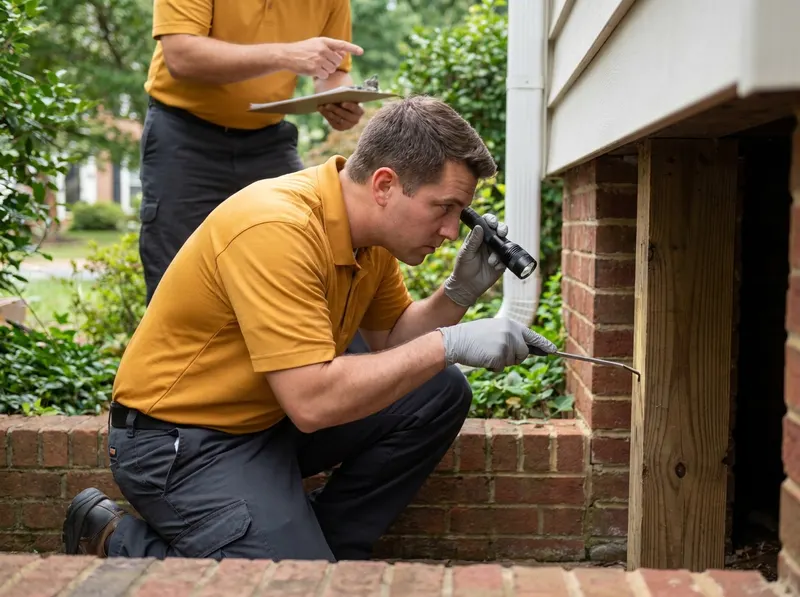
A termite inspection covers the crawl space or basement perimeter, sill plates, band joist, foundation walls, exterior wood-to-soil contact, and moisture conditions, and ends with a written wood-destroying insect report. Eastern subterranean termites are the default wood destroyer across Fairfax County because Northern Virginia's clay soil holds moisture tight against foundation walls and gives colonies a protected route to untreated wood. For a home sale, order the WDI report as soon as the contract is ratified — settlements handled near the Historic Fairfax County Courthouse on Chain Bridge Road move quickly, and a rushed termite letter is how deals slip. You get photos of anything found: mud tubes on block, shelter tubes climbing a pier, blistered baseboard, damaged sill wood, or a mulch bed graded above the siding line. If there is no active infestation, the report says exactly that, in writing, with no upsell attached.
View details →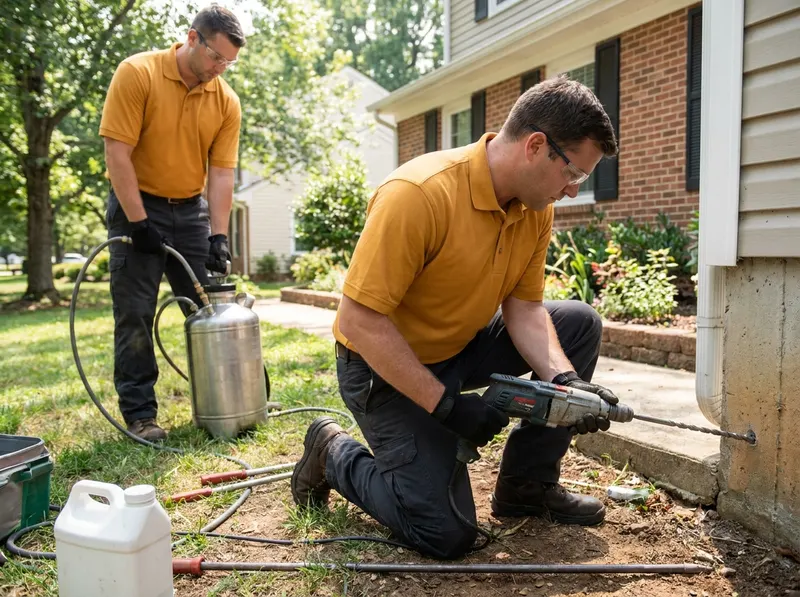
Termite treatment in Fairfax means either a liquid soil barrier applied by trenching the foundation perimeter and treating through the slab where needed, or in-ground bait stations installed and monitored around the exterior. Which one fits depends on where the activity is, whether the home is slab-on-grade or crawl space, and how much of the perimeter is buried under patio, stoop, or driveway concrete. Full-home treatment typically runs $1,200 to $3,000 based on linear footage and drilling; a limited spot treatment on one damaged wall section is a smaller job. Swarmers appearing indoors in March through May mean a mature colony is already in contact with the structure, and that call should not wait until summer. Product labels and the treatment diagram are available on request so you can see exactly what went into the soil and where.
View details →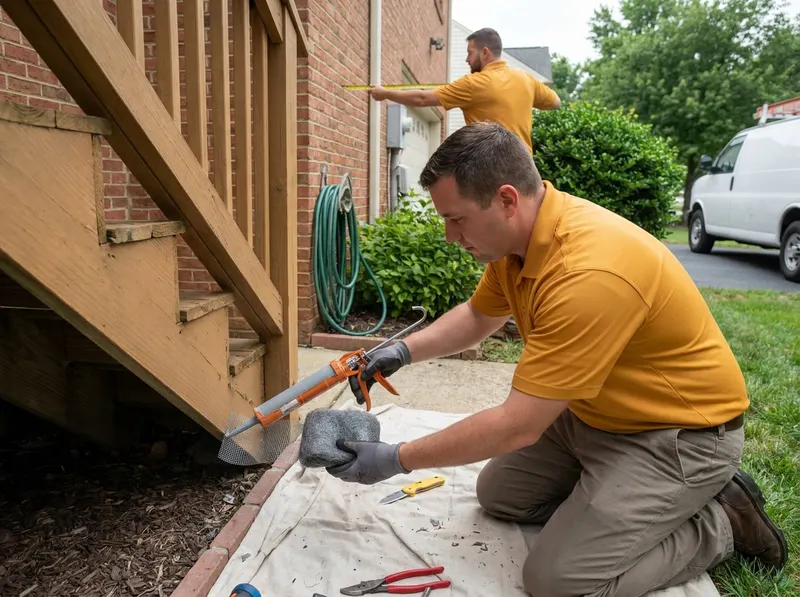
Rodent work here is two jobs: removing the mice or rats present, then sealing the openings that let them in. House mice fit through a gap the width of a pencil, and the usual Fairfax entry points are attached garage door corners, dryer and bath vents, crawl space vent screens rusted through, gaps at utility penetrations, and openings where brick veneer meets the sill plate. Activity climbs October through January as temperatures drop and mice move into crawl spaces, garages, and older basements in neighborhoods like Mosby Woods and Country Club Hills. The inspection includes an entry-point list with photos so you can see what gets sealed and why — sealing is done with materials rodents cannot chew through, not expanding foam alone. Interior trapping is monitored and the catch count is reported back, because a job is not finished on a promise.
View details →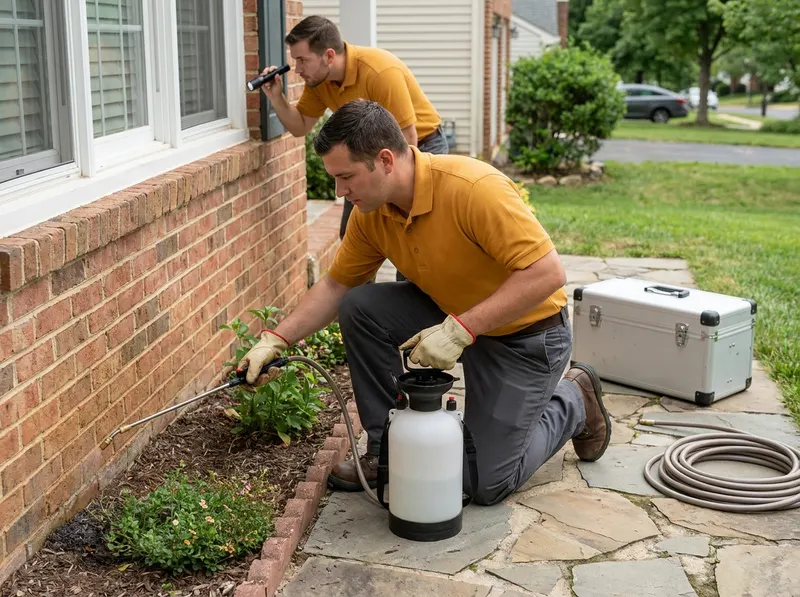
Ant control starts by identifying the species, because the treatment changes completely. Odorous house ants trail along counters and under sinks and are managed with non-repellent baits the workers carry back to the colony — spraying them visibly on the counter scatters the colony and makes the problem worse. Pavement ants push small soil craters out of driveway and patio expansion joints. Carpenter ants are larger, chew galleries in damp structural wood, and usually point to a moisture problem: leaking window flashing, a wet crawl space, or a tree limb resting on the roof. Ant calls cluster April through July in Fairfax and spike after heavy summer thunderstorms drive activity indoors. If the source turns out to be one cracked slab joint or a mulch bed piled against the foundation, that gets written down as the fix.
View details →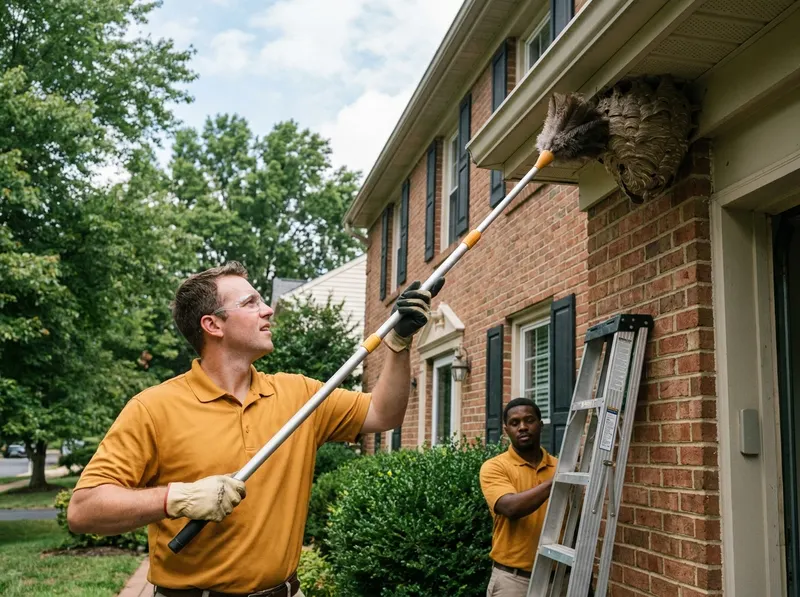
Nest removal covers paper wasps under eaves and rails, bald-faced hornets in trees and shrubs, and ground-nesting yellowjackets in lawns, retaining walls, and utility boxes. Yellowjacket and hornet work peaks August into early October, when colonies are at their largest and most defensive, and that is when a nest beside a front door or a deck stair becomes a real problem for a weekend gathering. No annual contract is required for a one-time nest removal — text a photo of the nest and its location to (276) 319-8415 and you can be scheduled directly. Void nests inside soffits and wall cavities are treated at the entry point rather than opened up, and the entry is checked again on a follow-up if activity continues.
View details →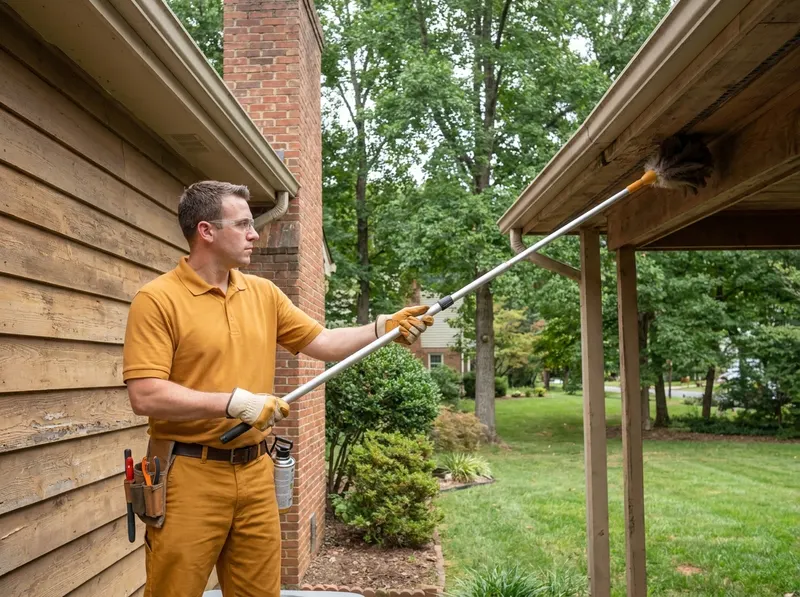
Carpenter bees drill clean half-inch round holes in unpainted or weathered wood — deck rails, fascia, pergola beams, shed trim, and the wood siding common on older homes around Old Town Fairfax. The hole you see is the entrance to a tunnel that runs with the grain, and woodpeckers chasing the larvae are what turns a small hole into an open gash. Treatment targets the galleries, and the honest follow-up is that plugging and painting or sealing the wood afterward is what keeps next spring's bees from reusing the same tunnels. Activity is heaviest in April and May when overwintered adults emerge to nest. Structural repairs are outside this scope, but the affected boards are photographed and listed so a carpenter can quote from real information.
View details →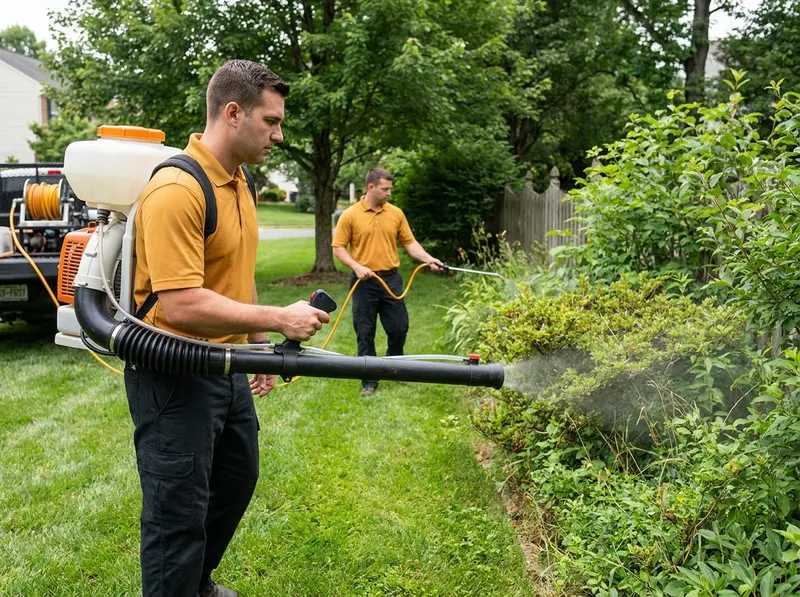
Yard treatment targets the shaded, humid resting sites where adult mosquitoes and ticks actually spend the day: leaf litter, ivy beds, dense shrub lines, low tree canopy, and fence lines. Demand peaks May through September and seasonal programs fill fastest in April, so early spring booking secures preferred start dates. A single treatment holds roughly two to three weeks; a season program of six or seven visits keeps steady pressure on the yard through the worst of July and August. Properties backing to wooded lots, the Accotink Creek stream valley, or park edges near Van Dyck Park and Daniels Run Park carry higher tick pressure than open interior lots. The inspection includes a water-source walk — gutters, tarps, corrugated downspout extensions, pot saucers, and toys holding rainwater — because eliminating breeding water beats any spray.
View details →
Brown marmorated stink bugs, boxelder bugs, cluster flies, and multicolored Asian lady beetles gather on sunny south and west walls in late September and October, then work into attics, window frames, and wall voids to overwinter. Exclusion is the part that lasts: sealing gaps at window and door trim, attic gable vents, soffit returns, cable and hose penetrations, and the ridge line where flashing has lifted. Treatment timing matters more here than anywhere else — the work should be scheduled before the first cold snap, because once the insects are inside the wall cavity a spray on the exterior does nothing for them. Homes with large sun-facing wall area in Fairchester Woods, Comstock, and Kings Park West see the heaviest fall gathering.
View details →Pest control service in Fairfax, Virginia is the inspection, treatment, and physical exclusion work that identifies which pest is present in a home, locates the entry points and moisture conditions feeding the problem, and seals or treats those points so the infestation does not return.
You get a firm, itemized quote for your pest control service before any work begins — no surprises, no pressure.
Careful prep, tidy work, and a full cleanup when we are done. We treat your home and belongings like our own.
The same trusted, background-checked team from the first call to the final check.
The real decision in Fairfax pest control is not which company sprays hardest — it is which type of work matches the evidence in your house. If you have one visible problem with a clear source, choose a one-time targeted service: a yellowjacket nest in the porch soffit, an ant trail from a single slab crack, carpenter bee galleries in fascia board. That runs $250 to $650, ends when the pest is gone, and carries no ongoing commitment. If you have repeat activity across seasons — ants in April, spiders in June, stink bugs in October, mice in November — choose a recurring perimeter program instead. The trade-off is honest: the one-time visit is cheaper today but treats a symptom, while the quarterly program costs $650 to $1,200 a year and holds the perimeter through all four seasonal waves. If the same pest comes back within weeks of a treatment, the entry point was never found — that is a diagnosis failure, not a product failure. For termites, the choice is a liquid soil barrier versus a bait system. A liquid barrier means trenching and treating the soil around the foundation and, on slab-on-grade homes common in parts of Westmore and Green Acres, drilling and treating through the slab perimeter; it acts fast and is the usual pick when there is active feeding in the structure. A bait system means in-ground stations installed around the exterior at set intervals and monitored on a schedule; it eliminates colonies more slowly but avoids drilling and suits homes with finished basement perimeters, complex hardscape, or shallow well concerns. If you want the fastest stop to active damage, choose the liquid barrier. If you want long-term colony monitoring with minimal disruption to a finished space, choose baiting. The trade-off is speed and immediate structural protection versus ongoing monitoring visits and a longer timeline. A 180-linear-foot ranch in Mosby Woods and a 300-linear-foot colonial with a wrap-around patio are two very different jobs on the same street — linear footage and how much perimeter is buried under concrete drive the number more than anything else. For mice, the choice is trapping versus exclusion, and it matters more than any product label. Trapping alone knocks the current population down for $250 to $450 and is reasonable if you caught a single mouse that came in through an open garage door. Exclusion is the permanent fix — sealing gaps a quarter inch and wider at garage door corners, dryer vents, crawl space vents, utility penetrations, and the gap where brick veneer meets the sill — and runs $450 to $1,800 depending on how much of the foundation needs sealing. If you want the mouse gone this week, trap. If you want the house closed so next October is quiet, exclude. The trade-off is a lower bill now versus not paying for the same problem every fall. For mosquitoes and ticks, a single treatment before a graduation party or a backyard wedding is a different purchase than a season program. One visit knocks down adults in the yard and holds for roughly two to three weeks; a seasonal program of six or seven treatments from May into September keeps pressure off shaded, damp ground continuously. If you have one date on the calendar, book one visit. If your yard backs to a wooded lot or the Accotink Creek stream valley, the season program is the only version that actually changes how the yard feels in July. And if the inspection shows the driver is standing water in gutters, a clogged corrugated downspout extension, or a stack of unused pots holding rainwater, you will hear that first — sometimes the honest answer is drainage and dumping containers, not another spray. For stinging insects, the fit depends on the species and the nest location. A paper wasp nest under a porch rail is a ten-minute job at the low end of the range. A ground-nesting yellowjacket colony in an August lawn, or a bald-faced hornet nest twenty feet up in a maple, takes protective gear, a longer treatment window, and sometimes a return visit for stragglers. If the nest is at head height by a front door or a kid's swing set, treat it now. If it is a solitary paper wasp nest in a shed you use twice a year, the honest advice is often to leave it alone until frost kills the colony. The trade-off is a small bill for immediate access to your own doorway versus waiting out an insect that will die off on its own in November. For a home sale, the choice is scope. A standard WDI report answers one question — is there evidence of wood-destroying insects — and is what most lenders and settlement agents want in hand. A full inspection with treatment and a repair-referral list is what a buyer wants when the report already shows old damage in the band joist. If you need the paperwork for closing, order the WDI report the week the contract is ratified. If you are the buyer and the report flags active tubes, get the treatment quoted before the inspection contingency runs out. The trade-off is a fast, narrow document versus a slower, complete picture of what the house actually needs.
Every project gets a firm, written price after a free on-site visit. Ranges below for orientation.
Tell us about your pest control service job and we'll send a clear, written quote — usually the same day. Or just call and talk to a real Fairfax pro.
(276) 319-8415
The City of Fairfax is an independent city fully surrounded by Fairfax County, and the housing stock inside it skews older than the county average — block crawl walls, original sill plates, and mid-century additions poured as slabs against existing foundations. That mix matters for termites: Northern Virginia clay holds water against foundation walls instead of draining it away, and the seam where an old foundation meets a newer slab addition is a classic untreated route into framing. Homes near the Accotink Creek stream valley and the shaded lots around Van Dyck Park and Daniels Run Park carry heavier tick and mosquito pressure than open interior blocks, and the same wooded edges feed fall stink bug and mouse movement into attics and crawl spaces. Around the George Mason University Fairfax campus and EagleBank Arena, rental turnover in late summer moves cockroach and mouse problems between units, which is why a single-unit treatment without exclusion at shared walls rarely holds. Real estate timing is its own Fairfax issue: contracts ratified for homes throughout Old Town Fairfax, Mantua, and Kings Park West often move to settlement near the Historic Fairfax County Courthouse on Chain Bridge Road on a tight calendar, and a WDI report ordered late is one of the easiest ways to delay a closing. Mulch beds graded above the siding line, downspout extensions that stop short of the grade, and firewood stacked against a garage wall are three conditions seen constantly on Fairfax lots — and all three get written into the findings report, because the conditions around a house predict the next infestation better than the pest you are looking at today.
Free estimates for Fairfax & the surrounding area.
 Bugvanta Pest Control